


The appearance of your urine can reveal a lot of information about your overall health. Changes in urine color, its odor, or urinary frequency can be related to hydration, diet, or even urinary tract infections and other medical conditions.
Learning to interpret these signals can help you detect problems early and improve your self-care habits.
Urine Color
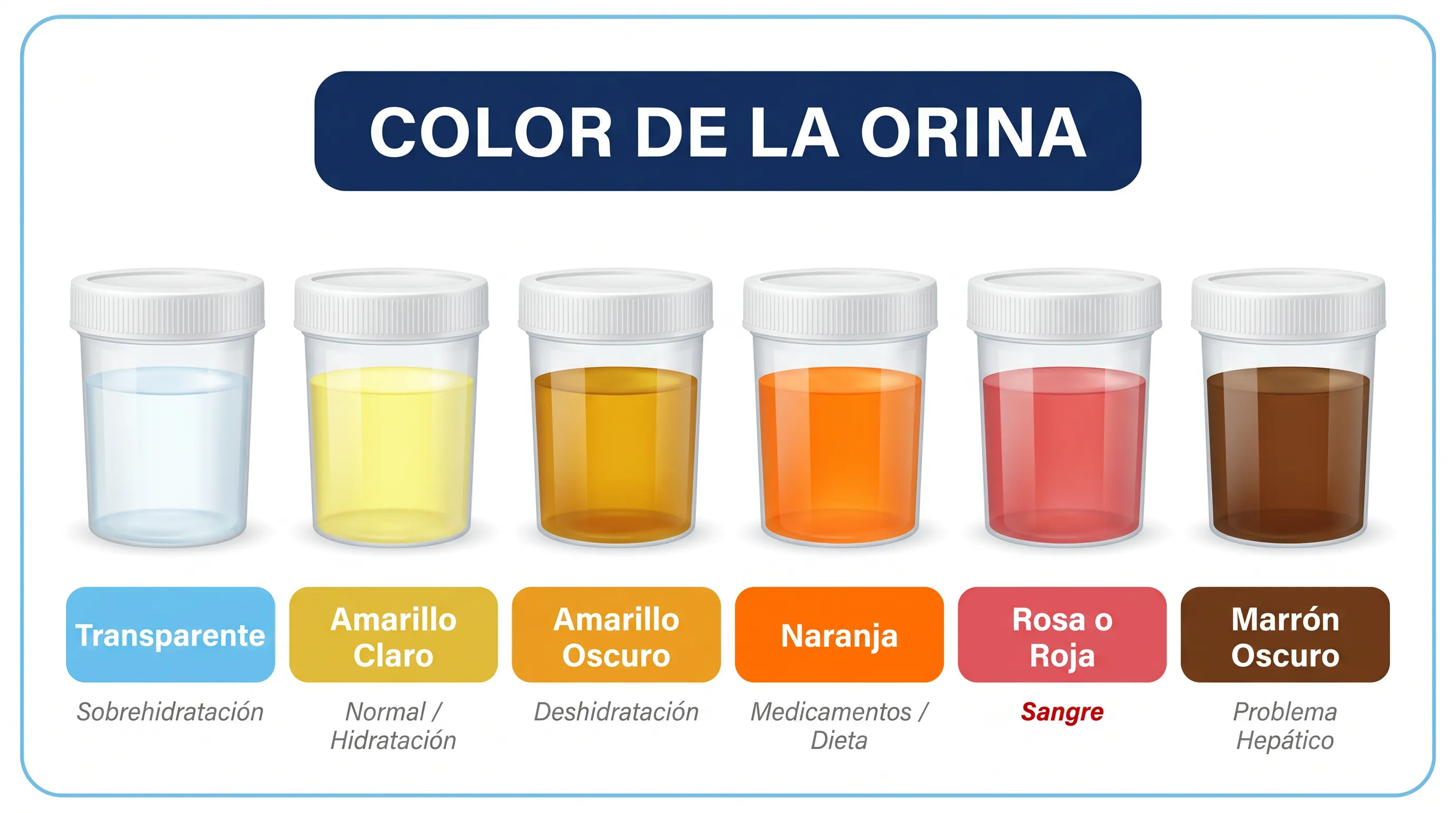
Urine color is one of the clearest indicators of hydration and health status1:
- Transparent: possible overhydration.
- Light yellow: normal and healthy color.
- Dark yellow: usually indicates mild dehydration.
- Amber or deep yellow: more pronounced dehydration.
- Orange: may be due to dehydration, diet, or certain supplements.
- Pink or red: may be related to foods like beets, but also to the presence of blood in the urine.
- Dark brown: may indicate severe dehydration or liver problems and requires medical attention.
Urine Odor
Urine odor can also offer important clues:
- Mild odor: normal in well-hydrated individuals.
- Strong ammonia smell: common in cases of dehydration.
- Sweet or fruity smell: may be related to elevated blood glucose levels.
- Strong and persistent odor: may be a sign of a urinary tract infection, especially if accompanied by other symptoms.2
Urinary Frequency: How Many Times Is It Normal to Urinate?
Urinary frequency varies from person to person, but in healthy adults, it is usually:
- Between 4 and 8 times a day as a usual range.4
- Significant changes may indicate:
- Infrequent urination: possible dehydration.
- Urination too frequently: possible urinary tract infection, high caffeine consumption, or bladder problems.2
How to Maintain Good Urinary Health 3
To promote good urinary health, habits such as the following are recommended:
- Maintain proper daily hydration.
- Do not hold urine for too long.
- Reduce excessive alcohol, caffeine, and sugar intake.
- Maintain good intimate hygiene with specialized products.
- Follow a balanced diet.
Observing urine color, odor, and frequency is a simple way to monitor your urinary health. These indicators can help you detect imbalances in your body and prevent problems such as dehydration or urinary tract infections.
Incorporating these observation habits into your daily life is a simple but very effective tool for improving your overall well-being.
References:
*1 Mayo Clinic Staff. (2025, October 11). Urine color: Symptoms and causes. Mayo Clinic. https://www.mayoclinic.org/diseases-conditions/urine-color/symptoms-causes/syc-20367333
*2 Skolarikos, A., Geraghty, R., Somani, B., Tailly, T., Jung, H., Neisius, A., Petřík, A., Kamphuis, G. M., Davis, N., Bezuidenhout, C., Lardas, M., Gambaro, G., Sayer, J. A., Lombardo, R., & Tzelves, L. (2025). European Association of Urology guidelines on the diagnosis and treatment of urolithiasis. European Urology, 88(1), 64–75. https://doi.org/10.1016/j.eururo.2025.03.011
*3 National Institute of Diabetes and Digestive and Kidney Diseases. (2024). Urologic diseases in America. National Institutes of Health. https://www.niddk.nih.gov/health-information/urologic-diseases
*4 Cleveland Clinic. (n.d.). Frequent urination. Cleveland Clinic. https://my.clevelandclinic.org/health/symptoms/15533-frequent-urination


