


Sometimes, due to one or more kidney stones blocking the urinary tract and urine flow, a ureteral catheter, double J catheter, or pigtail catheter is placed in the urinary tract. This is a flexible tube inserted into the ureter to allow urine to pass from the kidney to the bladder, thus preventing ureteral obstruction until the kidney stone is treated.
This catheter is, in most cases, a temporary solution and is only placed for a few days or up to a few weeks or months, depending on each case.
However, there is a time limit for keeping a catheter without removing it or replacing it with a new one, as it is important to know that they can calcify, which would complicate their removal. The estimated duration of a catheter will depend on its quality and manufacturing material.
If the doctor indicates that the catheter should be worn for 6 months, it is very likely that after 3 months, that catheter will need to be replaced with a new one for the remaining 3 months.
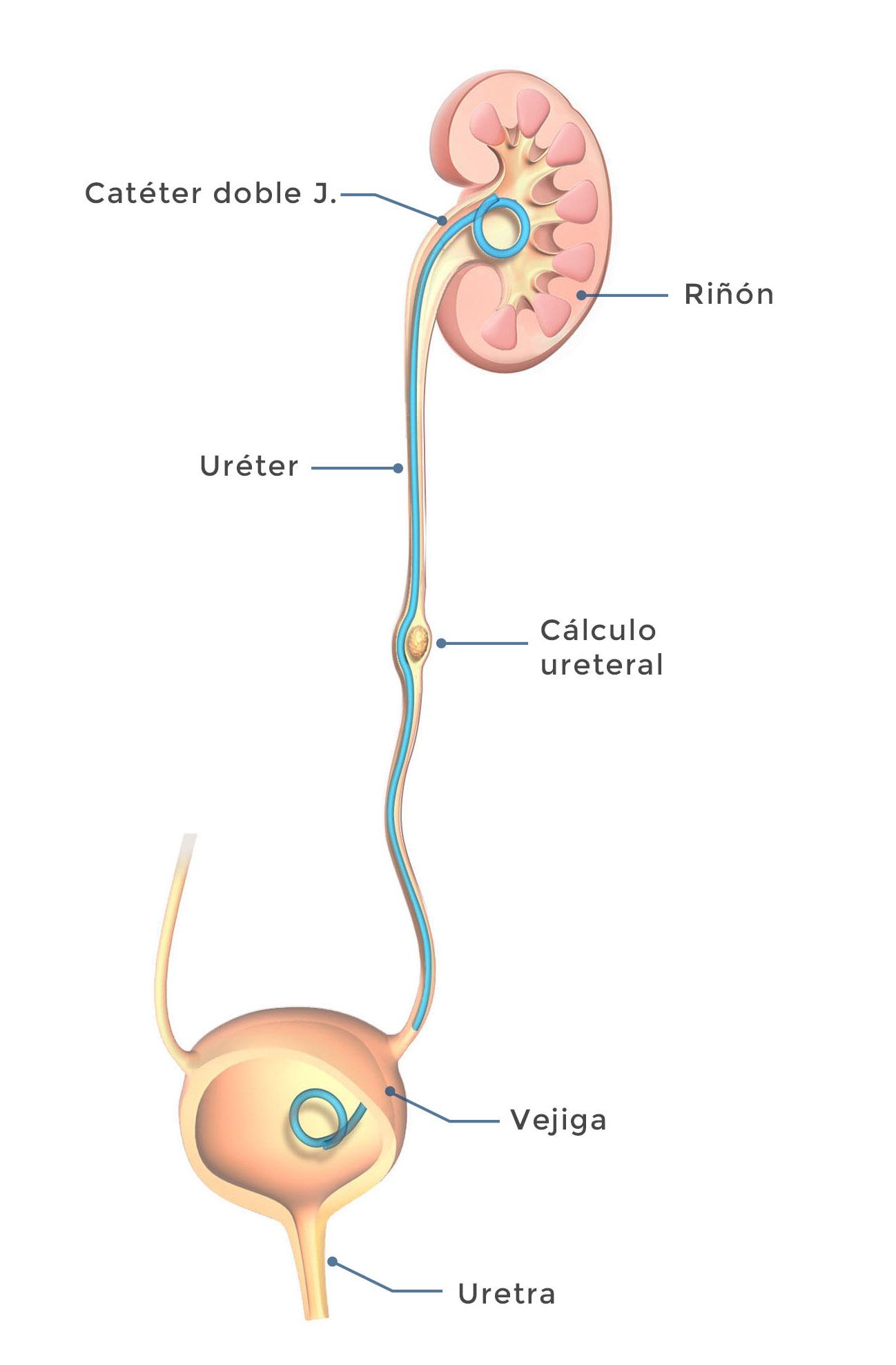
Unfortunately, one of the problems we are observing most with the saturation of health services is that appointments have been delayed, so people may wear the catheter for much longer than they should. Therefore, it is important to prevent potential calcification of the catheter with products that will inhibit crystal formation and acidify the urine, blocking the development of pathogenic bacteria at the origin of calcification. Indeed, the introduction of a foreign body into the organism entails potential risks of infection, so its presence must be properly monitored within the indicated times.
Having a catheter can cause the following symptoms: blood-stained urine, bladder spasms because its end rubs against and irritates the bladder's interior, a stinging sensation when urinating or having to urinate very often, and even a sharp pain in the kidney area during urination. To avoid discomfort with the double J catheter, it is advisable for the patient not to engage in intense physical exercise. Although some patients can do so without problems, with discomfort that is mostly mild and tolerable, in other cases this is not possible.
The removal of a double J catheter must be performed by a urologist through a quick outpatient procedure using an instrument called a cystoscope.
References
https://www.clinicbarcelona.org/asistencia/enfermedades/litiasis-renal


