


Approximately 15% of men and 8% of women suffer an episode of kidney stones during their lifetime. More than 50% of patients will suffer from kidney stones again within 5 years of the first episode, and 10% of patients will develop a chronic form of their lithiasis disease.
Kidney stones are formed within the kidney from substances that are in the urine. People who have suffered from kidney colic and expelled the stone that caused it have a greater chance of forming new stones.
Approximately 2 out of 3 stones are expelled spontaneously within 4 weeks of the onset of symptoms. Conversely, a stone that has not been expelled after 1 or 2 months is highly unlikely to be expelled spontaneously, and other treatment alternatives will be necessary for its elimination. (1)
Kidney stones, renal lithiasis, or kidney calculi, are the third most frequent pathology in the urinary tract, surpassed only by urinary infections and prostate-related pathology in men. (2)
Kidney stones occur when the amount of crystal-forming substances, such as calcium, oxalate, and uric acid, in the urine is greater than what the liquids present in it can dilute. At the same time, urine may lack substances that prevent crystals from adhering to each other, which, generally along with alterations in urine pH, creates an ideal environment for kidney stone formation.
When stones or calculi cause ureteral obstruction, patients suffer from renal colic, which manifests as intense pain in the lower back or flanks. Usually, the pain is felt on one side, but it could occur on both sides of your lower back. Renal colic can start quickly, come and go, and worsen over time. This pain has been described as "one of the most distressing forms of pain in humans" (1)
Frequently, the pain can be accompanied by other symptoms such as: pain when urinating, nausea and vomiting, feeling the need to urinate frequently, or immediately, urinating less than is normal for you, or not urinating at all, presence of blood in the urine, fever, etc.
Several factors can increase the risk of kidney stones, and some measures can have beneficial effects on their prevention (3)
Family or personal history. At least 25% of patients with recurrent colic have a family history of urolithiasis (4). If someone in your family has kidney stones, you are more likely to suffer from the disease. Furthermore, as stated, if you have ever had one or more kidney stones, you are at a greater risk of having another.
If this is your case, these familial and genetic factors are not modifiable, but they allow us to be more attentive to health recommendations aimed at prevention. Remember that prevention is always better than treatment. Good diet control or natural food supplements (Lit-Control pH Balance) that help prevent crystal aggregation will have a beneficial effect on prevention.
Dehydration. Not drinking enough water every day can increase the risk of kidney stones. People who live in warm climates and sweat a lot may be at greater risk than others. Sometimes it can even be related to the type of work performed, which can generally involve intense physical exercise and high sweating, low fluid intake, and difficulty urinating, retaining urine for prolonged periods.
The recommendation for proper hydration is: Drink more than 2.5 l of liquid per day (about 12 glasses), preferably water or fruit juices (citrus fruits such as orange, lemon, or grapefruit are generally recommended).
The way to check for adequate hydration is to achieve almost clear urine. Of course, special attention should be paid to replenishing more fluids in situations that increase losses: heat, exercise, illness, work. Perhaps the best recommendation is habitual: Get used to drinking. Make it another habit in your daily life. Set times to drink routinely.
Diet. In general, eating a diet high in protein, sodium (salt), and sugar can increase the risk of certain types of kidney stones. This is especially true with a high-sodium diet. Excess salt in the diet increases the amount of calcium the kidney has to filter and significantly increases the risk of kidney stones.
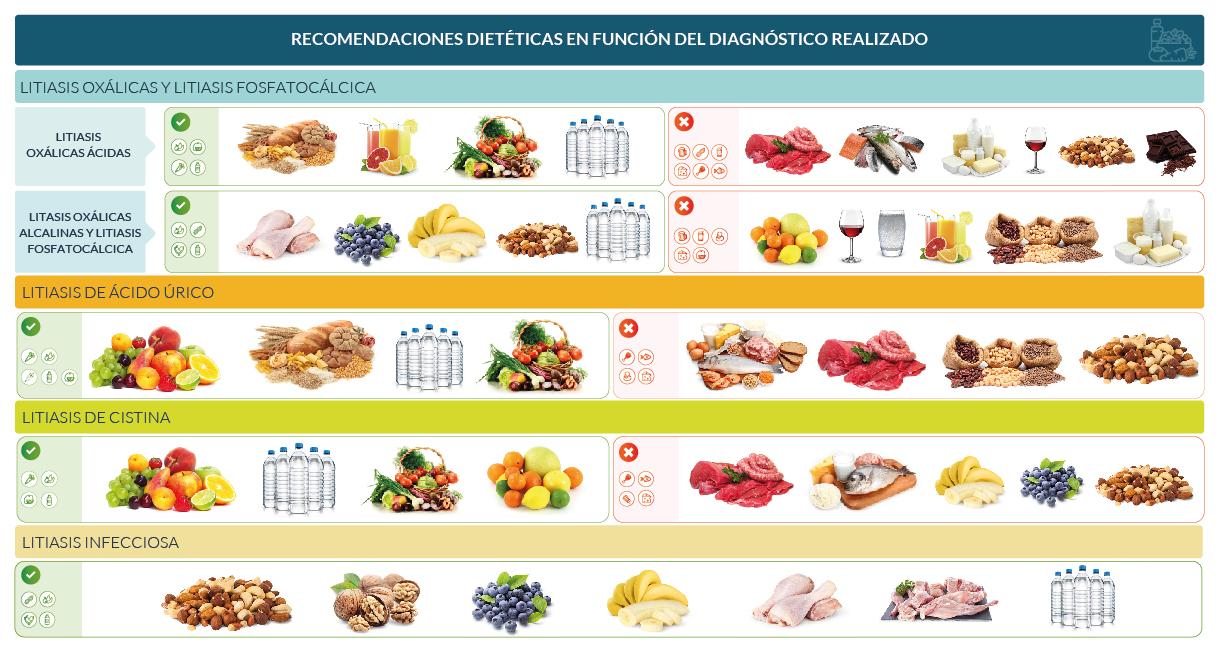
For correct and adequate prevention, if you have already suffered an episode of kidney stones, it will be essential to know the type and characteristics of the stone, as diet can help in prevention.
Given the close relationship between kidney stone formation and urine pH, a very suitable way to check if your diet puts you in a reduced risk area is to periodically monitor and track urine pH levels (Lit-Control pH Meter). A range, in most cases, depending on the type of stone formed, between 5.5 and 6.2 pH allows us to be in a low lithiasis risk area.
For stones containing calcium: Reduce the amount of oxalate-rich foods, such as vegetables, legumes, cereals, fruits, nuts, and especially spinach, beetroot, any nut, and cocoa. Although the opposite has always been advised, it is currently recommended to moderate, but NOT eliminate calcium from the diet (milk and dairy products) as it can increase the risk of stone formation. Be careful with some antacids that contain extra calcium. Increase foods rich in citrate such as lemon, orange, citron, bergamot, grapefruit, kiwi, currant, and guava.
For uric acid stones: Reduce consumption of meat, seafood, processed meats, aged cheeses, fats, and alcohol. In general, try to eat more carbohydrates and reduce proteins.
For cystine stones: Limit consumption of fish and red meat, and in general, excess animal protein.
Being obese. A high body mass index, a wide waist circumference, and weight gain can be associated with an increased risk of kidney stones.
If you are losing weight, do so slowly, as rapid weight loss can cause the formation of uric acid stones.
Surgery and digestive diseases. Gastric bypass surgery, inflammatory bowel disease, or chronic diarrhea can lead to changes in the digestive process that affect calcium and water absorption, increasing the levels of stone-forming substances in the urine.
Other diseases. Diseases and disorders that can increase the risk of kidney stones include metabolic diseases, diabetes, high blood pressure, renal tubular acidosis, cystinuria, hyperparathyroidism, certain medications, and some urinary tract infections.
Other measures that can generally have beneficial effects in preventing the formation of kidney stones are:
- Avoid a sedentary lifestyle and practice regular exercise. The simplest is to walk briskly daily.
- Avoid constipation, as it promotes the recurrence of colic.
- There are also treatments to prevent stones from forming. Their use depends on the type of stone. They must be prescribed by a doctor and taken according to their instructions.
- Consider consulting your doctor if you experience:
- Very intense back or side pain that does not go away
- Blood in the urine
- Fever and chills
- Vomiting
- Urine that smells foul or looks cloudy
- Burning sensation when urinating
- If you drink plenty of fluids and the amount of urine does not increase or decreases.
- If you are pregnant, have only one functioning kidney, or have a debilitating illness. See a doctor without delay if you have any suspicious symptoms.
References:
1. ESQUENA, S. et al. Renal colic: Literature review and scientific evidence. Actas Urol Esp [online]. 2006, vol.30, n.3 pp.268-280.
2. GARCIA PERDOMO, H et al. Pathophysiology associated with forming urinary stones. Urol Colomb 2016;25:109-17 Pathophysiology associated with forming urinary stones
3. SEMFyC HEALTH PRACTICAL GUIDE: UNIT 8. Kidney and urinary tract diseases (www.semfyc.es/formacion-y-recursos/guias/guia-practica-de-la-salud/)
4. Dall´era JE,et al. Gender Differences among Hispanics and Caucasians in symptomatic presentation of kidney and ureteral stones. J Endourol. 2005;19(3):283-286.


