


Urinary lithiasis consists of the formation of stones within the tracts responsible for carrying urine from the kidney to the urethra, passing through the ureter and bladder. Kidney stones can be composed of up to 6 different types of components, although the most common stones, occurring in 80% of cases, are calcium oxalate stones.
What are they?
These types of stones form when urine contains more oxalate and calcium substances than the liquid that can dilute them. When this occurs, calcium and oxalate form crystals, and if the urine at that moment lacks the substances that prevent crystal agglomeration, a perfect environment for the formation of these types of kidney stones is created.1
How to avoid or prevent them?2
1. Reduce oxalate intake
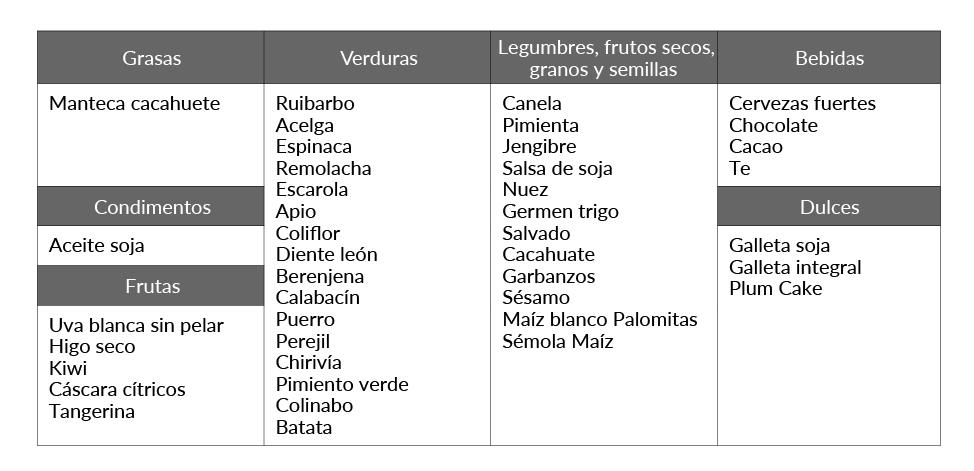
To reduce oxalate, it is necessary to reduce the consumption of oxalate-rich foods like those in the following table3:
2. Reduce sodium intake
To reduce sodium intake, it is necessary to follow a diet that limits foods containing a lot of salt, such as canned, packaged foods, fast food, condiments, dressings, and processed meats and cold cuts.
3. Limit animal protein
Not limiting animal proteins in your diet can increase the risk of kidney stones, which is why the following foods should be consumed in moderation:
- meat, chicken, and pork, especially organ meats
- eggs
- fish and seafood
Despite the importance of reducing animal protein, it is important to ensure that we continue to consume the necessary protein for our body. We can obtain it from other foods such as beans, peas, and lentils, which are high in protein and low in oxalate.
4. Get enough calcium from other foods
Although it might seem that calcium should be avoided, this is not the recommendation. Calcium is still necessary for our bodies, for our bones, and for blocking other substances that can cause stones. Therefore, the recommendation is to continue consuming calcium (between 1000 and 1200 milligrams daily), preferably from milk or other dairy products.1
5. Consume enough fluid
As we have mentioned on other occasions, don't forget that the most important thing to prevent stones is to drink 2 to 3 liters of liquid daily (preferably water). We will know it's enough when the color of our urine is almost transparent.
References:
Katherine Zeratsky, board-certified dietitian, Endocrinology and Nutrition, Mayo Clinic Rochester, Minnesota.
3https://www.fundacio-puigvert.es/sites/default/files/afp_4_2013_0.pdf


